
BA Distance Education

Bachelor of Arts 

Admissions are now open for the BA Distance Education. Enroll today and continue your studies from anywhere with the help of self learning materials and a digital library. 

Enquire Now
Checkboxes

Overview of BA Distance Education

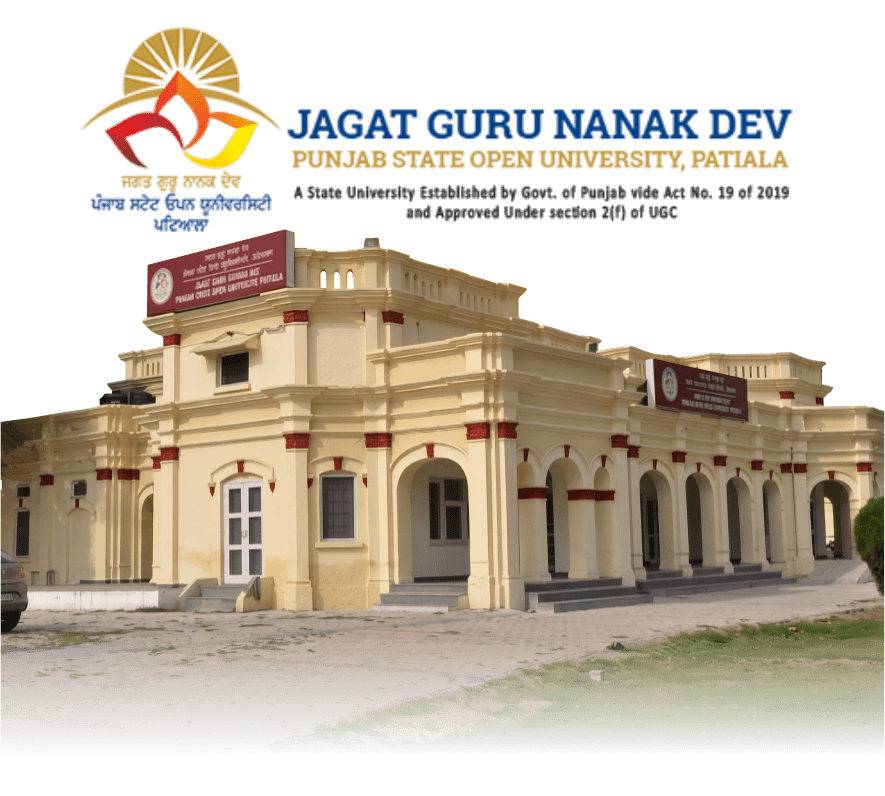
A BA Distance Education is an undergraduate course designed for students who want to complete their bachelor’s degree without attending regular classes. Jagat Guru Nanak Dev University allows students to study from home through self learning materials, online lectures, and digital libraries. This flexible mode of education is a perfect option for students who are employed but want to continue their studies without relocating. 

The Primary aim of this three-year course is to develop critical thinking, a creative mindset, employability skills, and ethical values to support their holistic development. The market-aligned curriculum helps students build subject knowledge, practical understanding, and career-ready skills for future opportunities. 

Duration and Eligibility for BA Distance Education

The BA Distance Course is a three-year multidisciplinary program that helps students develop theoretical skills, a creative mindset, and employability skills. 

To be eligible for admission to the distance BA program, students must have completed their 10+2 or its equivalent from a recognized board. 

UGC Entitled

Recognized by the University Grants Commission

Course Curriculum for BA Distance Education

Semester 1 Semester 2 Semester 3 Semester 4 Semester 5 Semester 6
Effective Communication in English
Punjabi Compulsory I
Sikh Heritage and Ethos

Discipline Core A (Choose any two):
Micro Economics
Introduction to English Literature
History of India: Indus Civilization to 1200 CE
Principles of Political Science
Introduction to Sociology
Religious Studies
Environmental Studies
English Compulsory I
Human Rights and Duties

Discipline Core B (Choose any two):
Macro Economics
Reading Prose
History of India: 1200–1750
Political Theory II
Indian Society
Religious Rites
Punjabi Compulsory II
Drug Abuse: Prevention and Management

Discipline Core C (Choose any two):
Public Finance
Reading Poetry
History of India: 1750–1947
Indian Political System I
Sociological Thought
Founder of Religion

Skill / Elective (Choose one):
Positive Psychology
Fundamentals of Computer
Entrepreneurship Development
English Compulsory II

Discipline Core D (Choose any two):
International Economics
Reading Drama
Contemporary India
Indian Political System II
Social Change in India
Holy Scripture

Skill / Elective (Choose one):
Enhancing Happiness at the Workplace
Web Designing and Development
Soft Skills
Discipline Specific Electives (Choose two):
Economics of Growth & Development / Indian Economy
Linguistics & Phonetics of English
History of Punjab (1450–1849)
Political Thought
Social Research Methods
Major Sects

Skill / Elective (Choose one):
Happiness at Workplace
Digital Marketing
English Language Teaching

Generic Elective GE-1 (Choose one):
Indian Society
Quantitative Methods
Introduction to English Literature
Indian Writing in English
Contemporary India
Principles of Political Science
Discipline Specific Electives (Choose two):
Quantitative Methods
Indian Writing in English
History of Punjab (1849–1966)
International Politics
Indian Society: Issues & Problems
Religious Thinkers

Skill / Elective (Choose one):
Measures of Happiness at Work
Digital GST
Programming Fundamentals

Generic Elective GE-2 (Choose one):
Social Change in India
Public Finance
Reading Poetry
Reading Drama
Reading Prose
Indian Political System I

Fee Structure for BA Distance Education

JGNDU Distance BA fees are very affordable and student-friendly, so that students from different backgrounds can pursue their course without the financial burden. In addition, the university also offers an online payment system so students can easily pay their fees from home using a debit or credit card, net banking, or UPI. 

Semester Fee (₹)
Semester 1 5,000
Semester 2 3,700
Semester 3 4,000
Semester 4 3,700
Semester 5 4,000
Semester 6 3,700

Top 5 Universities for BA Distance Education

UniversitiesBA Course FeeLocationApproval & Accreditation
Lovely Professional University (LPU)Rs. 7,500Phagwara, PunjabUGC, NAAC A++
Utkal UniversityRs. 6,000Bhubaneswar, Odisha, IndiaUGC, NAAC A+
IGNOURs. 4,800Maidan Garhi, New DelhiUGC, NAAC A++
Mangalayatan UniversityRs. 3,250Beswan, Uttar PradeshUGC, NAAC A+
Bharati Vidyapeeth UniversityRs. 20,000Pune, IndiaUGC, NAAC A++

Frequently Asked Questions

Both are degree courses that a student can start after completing their 12th. While pursuing a BA, students focus on subjects such as History, Political Science, Hindi, and English. On the other Hand BA (Hons.) means a specialized course in a particular subject. 

Yes, you can pursue an MBA after completing a BA degree. To be eligible for an MBA program, students must have graduated from a recognized university in any stream, including Arts, Commerce, and Science. 

It’s totally up to you what you want to do after completing the BA. You can continue your higher studies by pursuing an MA in your subject. You may also prepare for government jobs such as UPSC, SSC, or banking. 

Yes, a student can enter the media field after completing the BA degree. However, a media career requires strong communication skills, creativity, and practical experience; therefore, while completing the BA degree, students should focus on improving these skills.

Both mode have their own benefits. Distance learning is the best option for students who live in remote areas and are not able to relocate. Also perfect for those who want to balance their job and other responsibilities. 

There are many UGC-DEB-approved universities that offer a distance BA degree. Jagat Guru Nanak Dev University is also one of them, and it is accredited by the University Grant Commission(UGC) which akes its degree valid across India.

To be eligible for a distance BA, a student must have completed their 10+2 from a recognized board and must obtain at least 50% marks. 

JGNDU Distance BA follows the UGC guidelines that allow students to complete their degree in 3 years. It ensures that the qualification remains valid for employment and higher education.